

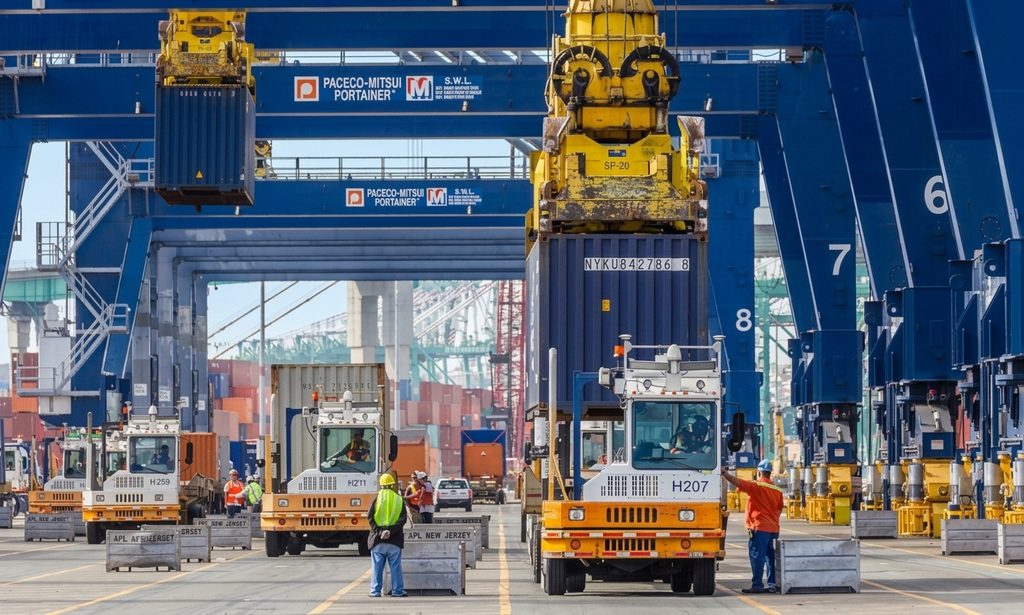
The Port of Los Angeles handled 1,042,652 twenty-foot equivalent units (TEUs) in September 2026, setting a new monthly cargo record in its 118-year history. The milestone reflects strong import activity and continued movement across global supply chains, particularly on transpacific trade routes connecting Asia and the United States.
The record-breaking month contributed to exceptional cargo volumes over several consecutive months. From July through September, the port handled nearly 3 million TEUs, marking its busiest quarter on record. Total throughput from June through September approached 4 million TEUs, representing the port’s strongest four-month period.
Rising Import Volumes Drive Port Activity
Import growth was a major contributor to the port’s performance in September. Loaded imports reached 545,696 TEUs, an increase of 19% compared with the same month in 2025. Loaded exports also rose by 10% to 125,751 TEUs, while empty-container movements totaled approximately 371,206 TEUs.
For the first nine months of 2026, the Port of Los Angeles handled nearly 8.1 million TEUs, more than 3% above the volume recorded during the same period in the previous year.
These figures highlight the continued importance of the United States as a destination for international cargo. Consumer demand, inventory replenishment, and adjustments to global shipping routes have contributed to cargo movements through Los Angeles, reinforcing its role as a major gateway for trade between Asia and the US market.
What Record Cargo Volumes Mean for International Logistics
As cargo volumes increase, effective transportation planning and coordination become increasingly important for importers, exporters, and logistics providers. Higher throughput can influence container availability, vessel schedules, port operations, and the coordination of inland transportation.
However, record cargo volumes do not automatically translate into higher freight rates or port congestion. Actual conditions depend on factors such as vessel capacity, carrier schedules, terminal operations, and the balance between cargo demand and available transportation resources.
For businesses shipping to the United States, these developments underscore the importance of monitoring freight market conditions and planning shipments in advance. Coordinating ocean freight with drayage, trucking, warehousing, and customs documentation can help businesses manage transportation costs, maintain shipment visibility, and reduce the risk of unexpected delays.
With Los Angeles serving as a key gateway for transpacific cargo, reliable coordination between ocean transportation and inland delivery remains an important part of an efficient supply chain.
How Dynamic Supreme Corp Supports Your Freight Forwarding Needs
At Dynamic Supreme Corp, we provide international freight forwarding and logistics solutions to help businesses coordinate shipments across global markets. Our services include ocean freight (FCL and LCL), air freight, drayage, FTL and LTL trucking, intermodal transportation, warehousing, and customs documentation and FDA/FSVP compliance support.
Whether you are importing goods into the United States or managing shipments across international markets, our team can help you explore suitable freight options and coordinate transportation based on your cargo requirements.
As global trade continues to evolve, Dynamic Supreme Corp is committed to providing flexible logistics solutions that help businesses connect suppliers, markets, and customers.