

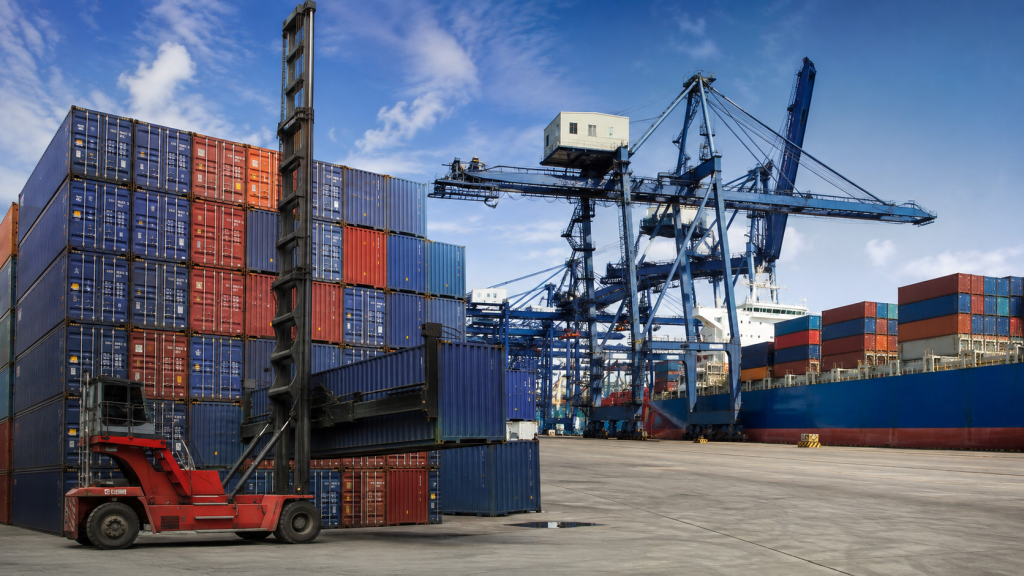
Global trade continues to expand, but stronger cargo volumes are also creating new challenges for the container shipping industry. One of the growing concerns is the increasing number of empty containers that need to be stored, handled, and repositioned across global trade routes.
The challenge is particularly visible on major East-West trade lanes, where trade imbalances between Asia, Europe, and North America can result in significantly different import and export volumes.
Strong exports from Asia, especially China, continue to drive substantial container flows toward Western markets. However, when export volumes moving in the opposite direction are lower, shipping lines may need to reposition empty containers back to Asia to meet equipment demand.
How Empty Containers Affect Global Logistics
Although empty containers do not carry cargo, they still require transportation, terminal handling, storage, and equipment management. As empty-container volumes increase, they can create additional pressure throughout the supply chain.
Container Repositioning
Shipping lines must move empty containers between regions to maintain equipment availability and support future shipments.
Port and Terminal Capacity
Empty containers still occupy valuable space and require handling at ports and terminals, adding to operational workloads and potentially contributing to congestion.
Equipment Availability
Trade imbalances can create container surpluses in some markets while other locations experience equipment shortages. This can make it more difficult for shippers to secure the right equipment at the right location.
Higher Transportation Costs
Additional empty-container movements can generate costs related to trucking, rail, terminal handling, storage, and other inland transportation activities.
Supply Chain Efficiency
An increase in loaded cargo volumes does not necessarily mean that the overall logistics network is operating more efficiently. Empty repositioning adds transportation activity that does not directly generate cargo revenue.
What It Means for Importers and Exporters
Changing global trade patterns can influence container availability, freight costs, routing options, and shipment schedules. For shippers, understanding these market conditions can help improve freight planning and reduce potential disruptions.
Working with an experienced freight forwarding partner can help businesses evaluate routing alternatives, coordinate inland transportation, manage shipment schedules, and respond more effectively to changing market conditions.
As global trade continues to evolve, efficient container management and supply chain coordination will remain important for maintaining reliable international freight operations.
How Dynamic Supreme Corp Can Help
At Dynamic Supreme Corp, we provide freight forwarding and logistics solutions designed to help businesses move cargo efficiently across international markets.
Our services include:
- Ocean Freight — FCL & LCL
- Air Freight
- Drayage
- FTL & LTL
- Customs Clearance
- Warehousing
- FDA & FSVP Support
Whether you are importing or exporting, our team can help you evaluate transportation options and develop a freight solution that fits your shipment requirements.